Monday, 1 April 2019

Social Studies


Early Communities in Canada: Letter Home


Dear Parent or Guardian,


The grade three classes are studying Early Communities in Canada. We will be investigating communities between 1780–1850, including First Nations and Métis communities and newcomer settlements in Upper and Lower Canada. Your child will learn about the relationships among various groups and the consequences of their interactions.


This unit will focus on the following core principle of Catholic Social Teachings: the person as a part of a family and a community, as well as the following Catholic virtues: faith, hope, love, justice, self-discipline, and courage.


To help your child become a more active and responsible Catholic Canadian citizen, consider the following activities:

• Discuss how different groups can work together to get along and respect one another.

• As a family, think of actions you can take to help your community.

• Encourage your child to make personal connections to events that happened long ago.

Your child will also be developing inquiry and mapping skills as we work on this unit: how to ask questions; how to gather and organize information; how to interpret and analyze images; how to evaluate information and draw conclusions; and how to analyze maps. To help develop your child’s skills, consider the following activities:

• With your child, ask questions about Canada’s history. For example: When did people first settle in our community? How were people’s lives then different from ours?

• Look for sources of information together that you can trust.

As we work on this unit, I will be sending home other activities that you and your child can work on together.


Thank you for your partnership in your child’s learning.


Communities in Canada, 1780 - 1850

Pioneer Life in Upper Canada - a web site specifically designed for grade 3 students of Ontario.  (English and French)
                                                                Web-based student learning activities for this site.
Great Upper Canada Pioneer Adventure - "Try your hand at life as a settler on the Sydenham River.  It is the 1800's and you have been recruited to the new world."  This online adventure is a Virtual Museum of Canada web site.  (version française)
The Kid's Site of Canadian Settlement - explores early settlement groups in Canada (Library and Archives Canada)  (version française)
Canadian History Exhibition Canada Hall at the Canadian Museum of Civilization Covers the years 1000 to 1890 - scroll down the page to find the links  -  (version française)
Pioneer Town Activity - Print out templates for assembling your own pioneer town.
Upper Canada Village - Sections on Daily Life, Agriculture, Communications, Music, Religion, Transportation, Manufacturing, and Major Events of the Decade. (The reading level of some sections is above grade 3.)


 Framing Questions
In what ways are our lives similar to and different from the lives of people in the past?

What are some challenges faced by people in the past?

How did people in the past relate to the environment? 

How were the lives of children different in the past to your life now?

Sunday, 31 March 2019

Grade 3: Social Studies: Heritage and Identity: Communities in Canada 1780-1850

For the next while we will be learning about early communities within Ontario. We will explore and compare the way of life of different indigenous groups (Metis, Anishinabe, Kahnawake). We will also explore the different early settler communities (Scottish, French and British settlers and the Black settlers from the south).

http://vlc.ucdsb.ca/c.php?g=156565&p=1026181


BRAIN POP
Kid friendly-reading maps, videos and other educational resources: https://jr.brainpop.com//free-stuff/

Who were the Metis people? http://www.awchimo.ca/culture.html


Friday, 8 March 2019

Measurement Song


Measurement Assessment


Measurement Assessment

Date: Friday, March 22, 2019

Please review the following key ideas:

Centimeters                    pages 106-107

Metres                          pages 108-109

Kilometres                    pages 110-111

Choosing a unit            pages 112-113

Perimeter                      pages 114-115

Area                               pages 199-201

Linear Measurement

Metric Rap: https://youtu.be/djTNUp4XIRo
Family Newsletter

Dear Parent/Caregiver:

Your child will be learning how to measure length, area, perimeter, time, and temperature.
They will estimate and compare lengths in centimetres and metres, and they will learn how long a kilometre is. They will also estimate, measure, and compare perimeters. They will tell time on digital and analog clocks and read thermometers.

Throughout this time, you and your child can do some activities such as:

 • Your child can determine his or her age and the ages of family members in years, months, and days.

• Your child can determine the number of weeks and days between family birthdays or other special days throughout the year.

• Your child can estimate and measure various lengths (for example, the height of the refrigerator or another appliance, the perimeter of your living room, or the distance from your house to the street).

• You and your child could use an outdoor thermometer to read the daily temperature and record the information on a chart.

You may want to visit the Nelson Web site at www.mathk8.nelson.com for more suggestions to help your child learn mathematics and for books that relate children’s literature to area and grids. Also check the Web site for links to other sites that provide online tutorials, math problems, and brainteasers.

Friday, 11 January 2019

Social Studies -Living and Working in Ontario

Dear Parents,

All students will also be assessed on Thursday January 17th, 2019. For that assessment they are asked to be familiar with all of  the land form regions

Students are also able to demonstrate their learning about one land form region.
They have chosen to present their learning using one of the following methods:
  • poster
  • power point
  • video


Monday, 7 January 2019

Efficient Math Strategies

Sheppard software is a new math game.

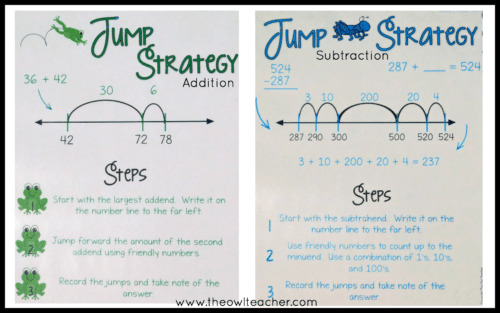
Today in grade 3, the students have been discussing efficient mental math strategies.

We also discussed clues we read in math problems and how they help us know if we have to add or subtract or do both (example: sum, different, altogether).


Doubles: 4+4=8+2 = 10


Make ten 8+2= 10


As we roll the dice we add on each roll plus our previous total.  What strategies help you to add quickly?


CHALLENGE:  Start at 100 and subtract each time. Try subtracting using friendly numbers (2, 5, 10).

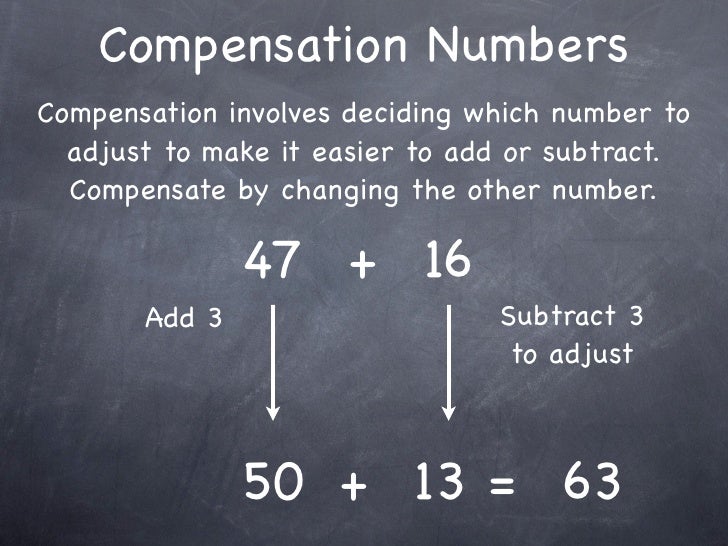
Image result for compensate math strategy

How can adding and subtracting friendly numbers help you?

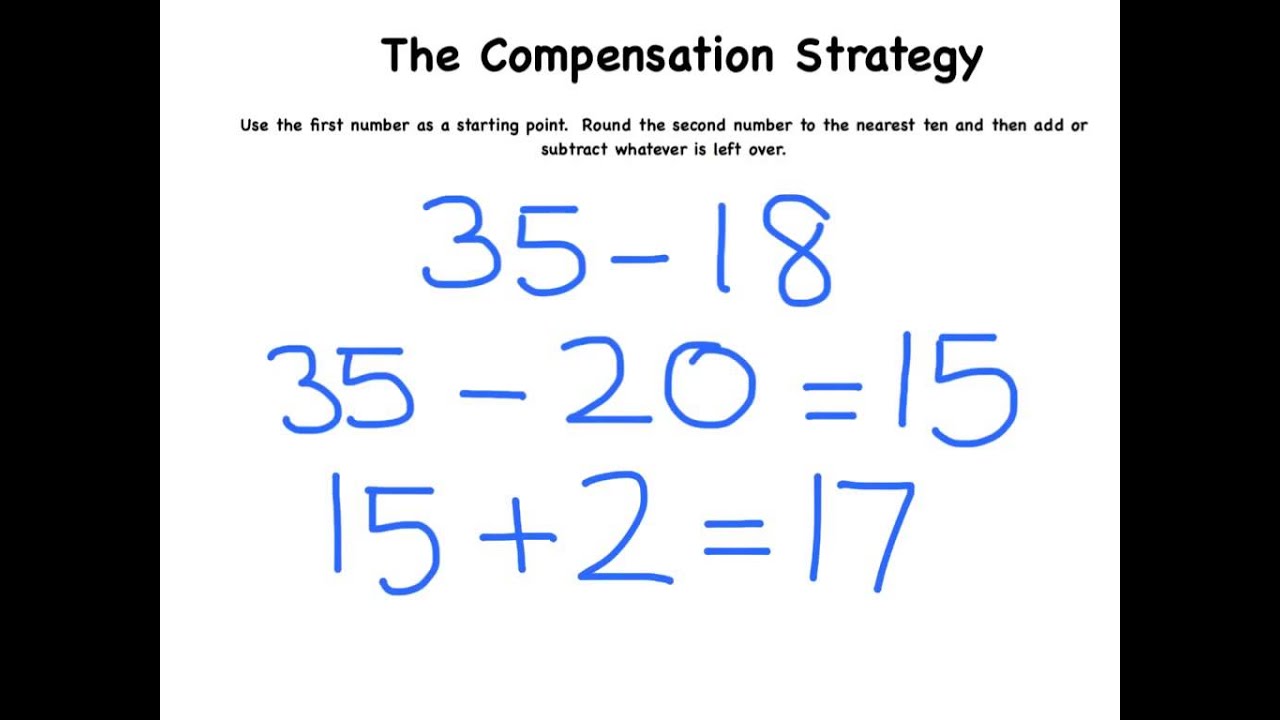
Image result for compensate math strategy


How can real life math help with quick mental math?

Monday, 10 December 2018

Advent

Letter to Families

Dear Parents and Caregivers,

We are now ready to begin Unit 2: The Road to Bethlehem in the Growing in Faith, Growing in Christ program for Grade 3. This unit explores the topics of how we wait in joyful hope for the birth of Jesus through the season of Advent, celebrate the glory of Christmas, and continue to carry on the mission that Jesus was sent to do.

This unit will take approximately five weeks. During the unit, students will learn

• how God revealed His promise to send a Messiah through the prophets

• how to prepare ourselves through prayer and penance for Jesus’ second coming

• more about the ancestors of Jesus through the stories of people whose symbols are displayed on the Jesse Tree

• details about and the significance of the events leading up to and surrounding the birth of Jesus

• how God’s grace helped Mary and Joseph make their decisions

• how Jesus’ birth is the fulfillment of the prophecies

• how we are called to share the Good News of Jesus, His birth, and His life with others

• what missionaries do and how we can be missionaries in our own communities

Please speak with your child about what he or she is learning in the classroom and share in the experiences as often as possible.

We value the support you provide in nurturing the faith development of your child

Tuesday, 20 November 2018

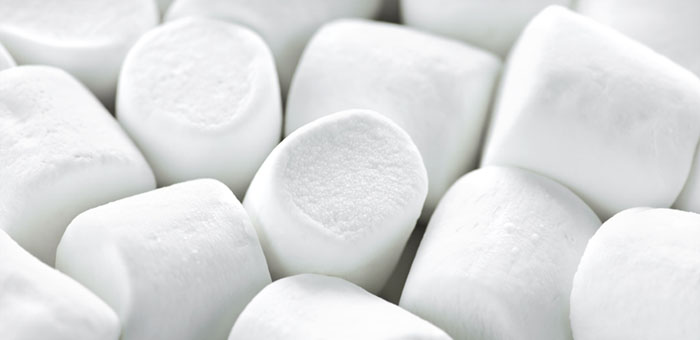
Self-Regulation and the marshmallow test

One treat now—or two if I wait.


That’s the choice Ms. Kerrigan's students were able to make when they took the Marshmallow Test today. This is a famous measure of how well children can delay gratification.

All students chose to wait. After 15 minutes they were given a second. 

"The Stanford marshmallow experiment was a series of studies on delayed gratification in the late 1960s and early 1970s led by psychologist Walter Mischel, then a professor at Stanford University. The children could eat the treat, the researchers said, but if they waited for fifteen minutes without giving in to the temptation, they would be rewarded with a second treat." Marshmallow Experiment


Image result for marshmallow

Monday, 19 November 2018

Anti Bullying Week

Remember this week is anti bullying week. Please participate in the following ways.

  1. Tuesday wear pyjamas with a stuffy.
  2. Wednesday wear black.
  3. Thursday is jersey day.
  4. Friday is pink day.

Sunday, 18 November 2018

2D Geometry Assessment

Please review:
  • Names of Polygons
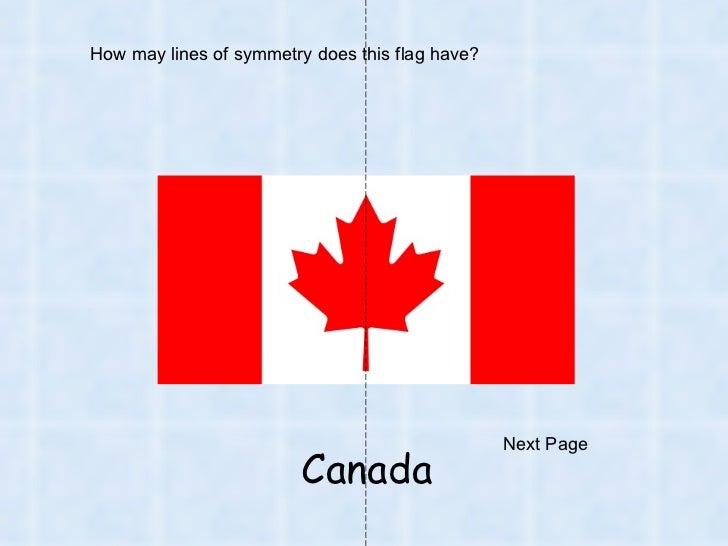
  • Geometric properties (ex. number of sides, number of vertices, lines of symmetry)
  • Lines of Symmetry (draw the other half of a shape, draw the lines of symmetry in a shape)
  • Polygon review

Friday, 16 November 2018

Monday, 12 November 2018

Social Studies: Living and Working in Ontario


Living and Working in Ontario:
Letter Home

Dear Parent or Guardian,

Our class is studying a new social studies unit: Living and Working in Ontario.

We will be learning about the three landform regions in Ontario, including their features, climate, and natural resources. We will also learn about people’s connections to the land and natural resources. We will explore the challenges of balancing people’s needs and wants with protecting God’s Creation.

This unit will also focus on the following principle of Catholic Social Teachings: the person as God’s manager, worker, and steward of Creation. As well, it will focus on the following Catholic virtues: faith, hope, love, good sense, fairness, courage, and self-discipline.

To help your child become a steward of God’s Creation, consider the following activities:

•      Discuss how your family tries to care for the environment or your community.

•      As a family, commit to actions you can take to do more for the environment or your community.

Your child will also be developing inquiry and mapping skills as we work on this unit: how to ask questions; how to gather and organize information; how to interpret and analyze information; how to evaluate information and draw conclusions; and how to analyze and construct maps. To help develop your child’s skills, consider the following activities:

•      Discuss with your child how land is used in your community for recreation, commerce, housing, conservation, and so on.

•      Examine maps of Ontario with your child. Talk about what you can learn from these maps.

As we work on this unit, I will be sending home other activities that you and your child can work on together.

Thank you for your partnership in your child’s learning.

Living and Working in Ontario sites

Ontario Curriculum Expectations: Social Studies Expectations
We are learning about Ontario Landform Regions.  These are the Hudson Bay Lowlands, Canadian Shield and the Great Lakes St. Lawrence Lowlands.


Learn more about Ontario:

Information about Ontario

Ontario tourism site

Historical Ontario tourism video

Learn more about the province of Ontario

Welcome to Ontario video clip

TRCA--The Living City TV

What is a Map? (choose Maps)
http://www.tvokids.com/shows/mycanada

Learn about the province of Ontario:  http://www.tvokids.com/videos/ontario

Solve the Mystery:  http://www.tvokids.com/shows/canadamystery

Tourist attractions in Ontario:

 http://www.tvokids.com/videos/bmxbiking


Maps of Ontario:  http://www.ontario-canada-travel.com/map-of-ontario.html#.Uj-3eCZzbcs

http://geology.com/canada/ontario.shtml

Countryside Investigators

Ontario Watersheds

The Great Lakes (choose lakes): http://www.tvokids.com/shows/mycanada

Canada's Physical Regions:  http://hrsbstaff.ednet.ns.ca/phillie/InternationalExchange/Canada/Physical%20Regions/Physical_Regions/

Learn about landforms

Ontario's Physical Regions:

Hudson Bay Lowlands:
http://www.pc.gc.ca/docs/v-g/nation/sec4.aspx
http://www.ontario.ca/page/forest-regions
http://www.arctic.uoguelph.ca/cpe/environments/inland_water/hudson.htm


Canadian Shield:
http://www.pc.gc.ca/docs/v-g/nation/sec3.aspx
http://www.canadiangeographic.ca/atlas/themes.aspx?id=canadianlandforms&sub=canadianlandforms_land_shield&lang=En
                        
Great Lakes-St. Lawrence Lowlands:
http://www.pc.gc.ca/docs/v-g/nation/nation76.aspx
http://www.canadiangeographic.ca/atlas/themes.aspx?id=canadianlandforms&sub=canadianlandforms_land_lakes


Canadian Geographic Atlas for Kids

Fun facts about Ontario:  http://www.canadiangeographic.ca/kids/fun-facts/default.asp

Online Kids' Dictionary:  http://kids.wordsmyth.net/we/

List of Towns in Ontario:  http://en.wikipedia.org/wiki/List_of_towns_in_Ontario

List of Cities in Ontario:  http://en.wikipedia.org/wiki/List_of_cities_in_Ontario

Map of Cities and Towns in Ontario:  http://www.citypopulation.de/Canada-Ontario.html

List of Townships in Ontario:  http://en.wikipedia.org/wiki/List_of_townships_in_Ontario

List of Villages in Ontario:  http://en.wikipedia.org/wiki/List_of_villages_in_Ontario

Map of Ontario Counties:  http://www.mapsofworld.com/canada/provinces/ontario-county-map.html

Information on Ontario's Municipalities:  http://www.amo.on.ca/YLG

Information about Toronto's government

Poem:  Where Does It Come From?

A relief map of Ontario

Video clip about natural resources

Video about natural resources

Quiz about natural resources

Where did that pencil come from?  Interactive activity

Find a farm in Ontario

Egg Farmers of Ontario

From Farm to Table

Virtual farm tour

A fishing community:  Norfolk County
Map of Norfolk county

​Automotive Industry clip
Manufacturing in Ontario:
http://www.investinontario.com/en/Pages/OS_automotive.aspx

Oshawa GM Plant clip

Living in Oshawa:
http://www.oshawa.ca/eco_dev/bus_serv.asp

List of Automobile Assembly Plants in Southern Ontario

Did you know that Rockets are made in Ontario?

World's Largest Salt Mine
http://www.thestar.com/news/2014/08/11/the_world_s_largest_salt_mine.html

Ontario Forestry IndustryForests Ontario

Ports in Ontario

Ontario Mining Association

Information from Ontario Mining Association

A career in mining

Jobs in mining

Videos in mining

Information about communities in Ontario

Perspectives on Urban Sprawl

A perspective on Urban Sprawl

Information about the Ontario Greenbelt

Ontario Greenbelt Adventure

Where Should I Live in Ontario?

Living in the Niagara Region

A travel brochure from Bruce Peninsula

City Creator Interactive site where students can create their own community

Types of Communities A visual representation of an urban, suburban and rural community.

We will be making Venn Diagrams using this site to compare municipalities.

From Link to Learning:
CanadaInfo: A Tribute to Canada - a collection of information and links about Canada, its land, government,
people, and rich culture.

Capital  Scramble - identify the provinces and their capital cities in  this interactive game

Canada's  Treasure Hunt - from TVO Kids - Search for "hidden treasure"  as you learn about the provinces and
territories of Canada

Interactive Map  of Canada  - information about the provinces, cities and  major attractions appear
as you move your cursor over the map

We are learning about how needs and wants affects where people may live in Ontario.
As part of our We Scare Hunger campaign, we are learning about why we are holding a food drive for our community food banks.
Daily Break Food Bank

Who's Hungry

Food Banks of Canada